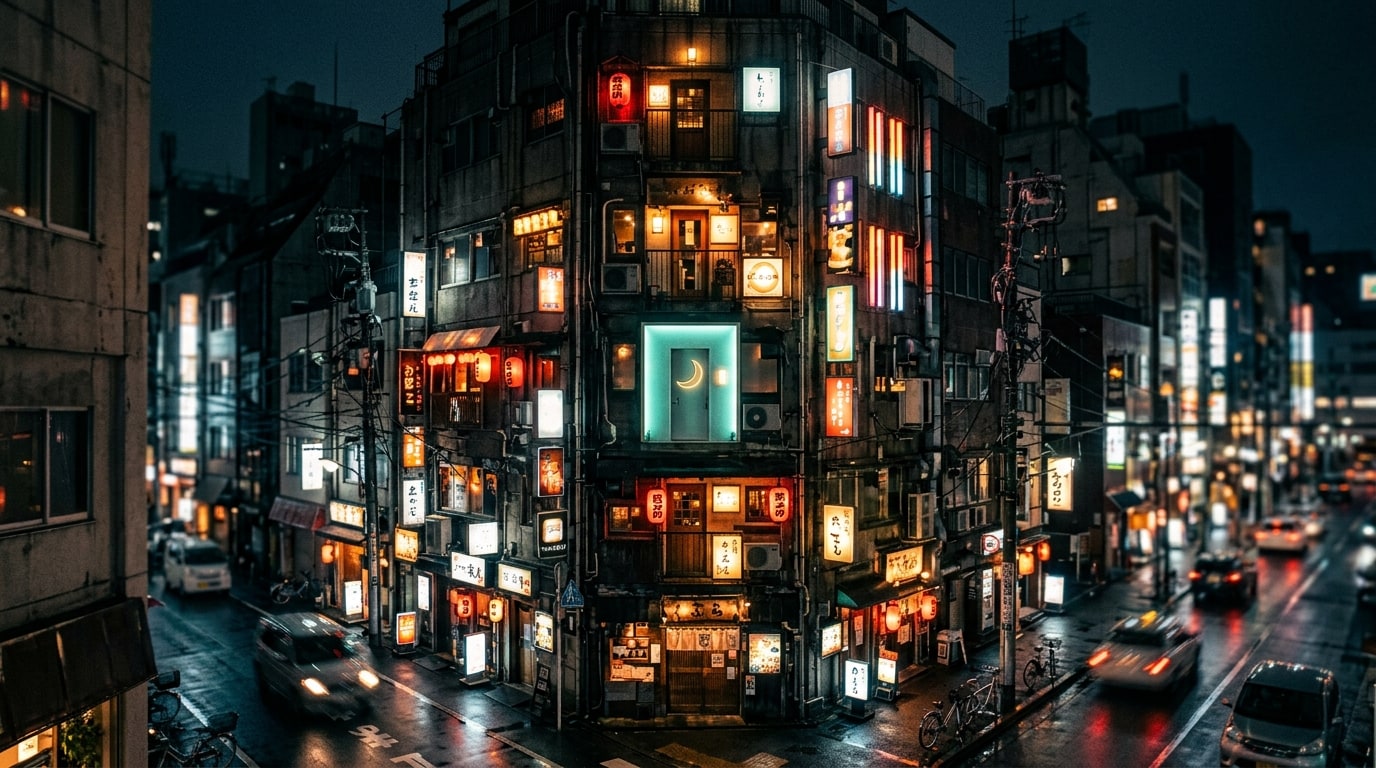
Types of Bars in Japan: A Guide to Tokyo Nightlife
From the street, a Tokyo izakaya, a “snack,” and a hostess club can look almost identical — a small sign, a narrow stairwell, a glowing doorway. Inside, they run on completely different rules and completely different bills. Here’s the whole map, so you always know which door you’re opening.
The casual tier: no surprises, no companionship
These are the venues where you drink, eat, and pay for exactly what you ordered — no seating games, no one sitting with you unless you brought them.
An izakaya is the Japanese pub: shareable small plates, draft beer, sake and highballs, informal and lively. It’s the default night out in Japan and the safest first stop for any visitor. A tachinomi is a standing bar — the same idea, cheaper and faster, where you stand at the counter and move on. A plain bar or dining bar is what it sounds like: cocktails or food in a relaxed room, Western-style. Across this tier you’ll typically spend ¥3,000–6,000 a head, the menu prices are the real prices, and the only etiquette is ordering at least one drink. For a fuller breakdown of when to pick each, see our guide on where to actually drink in Roppongi.
If your night is about food and your own company, you can stop reading here — this tier is genuinely all you need.
The companionship tier: where the rules get complicated
This is the group foreign visitors most often misread, because the venues look casual but charge for company and time.
A snack (スナック) is a tiny neighborhood bar run by a “mama” who chats with regulars — warm, local, and usually carrying a fixed seating charge plus a real language barrier. A girls bar is a casual counter bar where female staff serve and talk to you from behind the bar. A kyabakura (キャバクラ) is the high-energy hostess club: hostesses sit at your table, and the bill is built from a set charge, time extensions, nomination (指名) fees, and drinks you buy for the hosts — it climbs the longer you stay. A host club (ホストクラブ) is the gender-flipped version, with male hosts.
None of these are scams, but they share one trap for a visitor: you often can’t see the full price, or communicate easily, until you’re already seated. If you want to understand the most common one in depth — including how the pricing actually stacks up — read what a kyabakura is and how a lounge differs.
The private tier: lounges
A private lounge sits apart from both tiers above. You get a private room rather than a shared floor, company is included rather than metered drink-by-drink, and — at the venues worth your time — the price is a single published number you see before you sit.
LUNE is a private lounge, not a kyabakura. Concretely: a private suite for one to six guests on the 6th or 7th floor of the Power House building at 7-12-3 Roppongi, with karaoke built in and 12 to 15 amateur (素人) hosts on rotation — friendly locals, real conversation, no scripted upselling and no pressure to nominate anyone. The price is ¥18,000 for 60 minutes, all-inclusive, with drinks and karaoke covered, and we host a maximum of three parties per night so the evening is never rushed. English and Chinese support throughout. Questions before you come? Call +81-3-6434-7041. This is the tier to choose when the night is about privacy, conversation, and not gambling on a surprise bill.
How to read the price — and pick safely
The single most useful habit in Japanese nightlife is knowing how a venue charges before you sit. The casual tier charges per item (what you see is what you pay). The companionship tier charges for set time plus extras, which is legal but easy to misjudge. The private-lounge tier, done right, charges one all-inclusive number up front. Match that to your night: budget food and friends → casual; guaranteed company in a lively room → kyabakura/host club; a private room with included karaoke and a fixed price → a lounge.
Two rules protect you everywhere: never follow a street tout into an unlabeled bar, and confirm the full price in writing before you’re seated. For the deeper version of both, see our Roppongi price guide and how to stay safe and avoid scam bars.
FAQ
What are Japanese bars called?
Japan has several distinct types: izakaya (pubs), tachinomi (standing bars), snacks (スナック, small host-run bars), girls bars, kyabakura (キャバクラ, hostess clubs), host clubs (ホストクラブ), regular bars, and private lounges. Each has its own pricing model and atmosphere, so the name tells you what to expect.
What’s the difference between a snack and a kyabakura?
A snack is a small, low-key neighborhood bar where a “mama” chats with everyone, usually with a modest fixed charge. A kyabakura is larger and higher-energy, with hostesses who sit at your table and a bill built from set charges, extensions, and nomination fees that grow over the night.
What is a host club in Japan?
A host club (ホストクラブ) is like a kyabakura with the roles reversed — male hosts entertain and pour drinks for guests, often a mostly female clientele. Pricing works similarly: set charges, nomination fees, and bottles, which can climb quickly. It’s legal and licensed, not a scam, but easy to overspend in.
Which Japanese bar is best if I don’t speak Japanese?
Izakaya and standing bars are easy with pointing and a translation app. Snacks and kyabakura usually assume Japanese and can feel awkward without it. A foreigner-focused lounge like LUNE offers English and Chinese support, so the language barrier disappears entirely.
How much do Japanese bars cost?
Roughly: izakaya and standing bars run ¥3,000–6,000 per person; snacks add a seating charge; kyabakura and host clubs vary widely because the tab grows with time and extras. A lounge like LUNE is fixed at ¥18,000 for 60 minutes, all-inclusive — higher per head, but with no surprise charges.
Now that you can read the whole map, the private-room tier is one click away. Reserve your evening at LUNE.