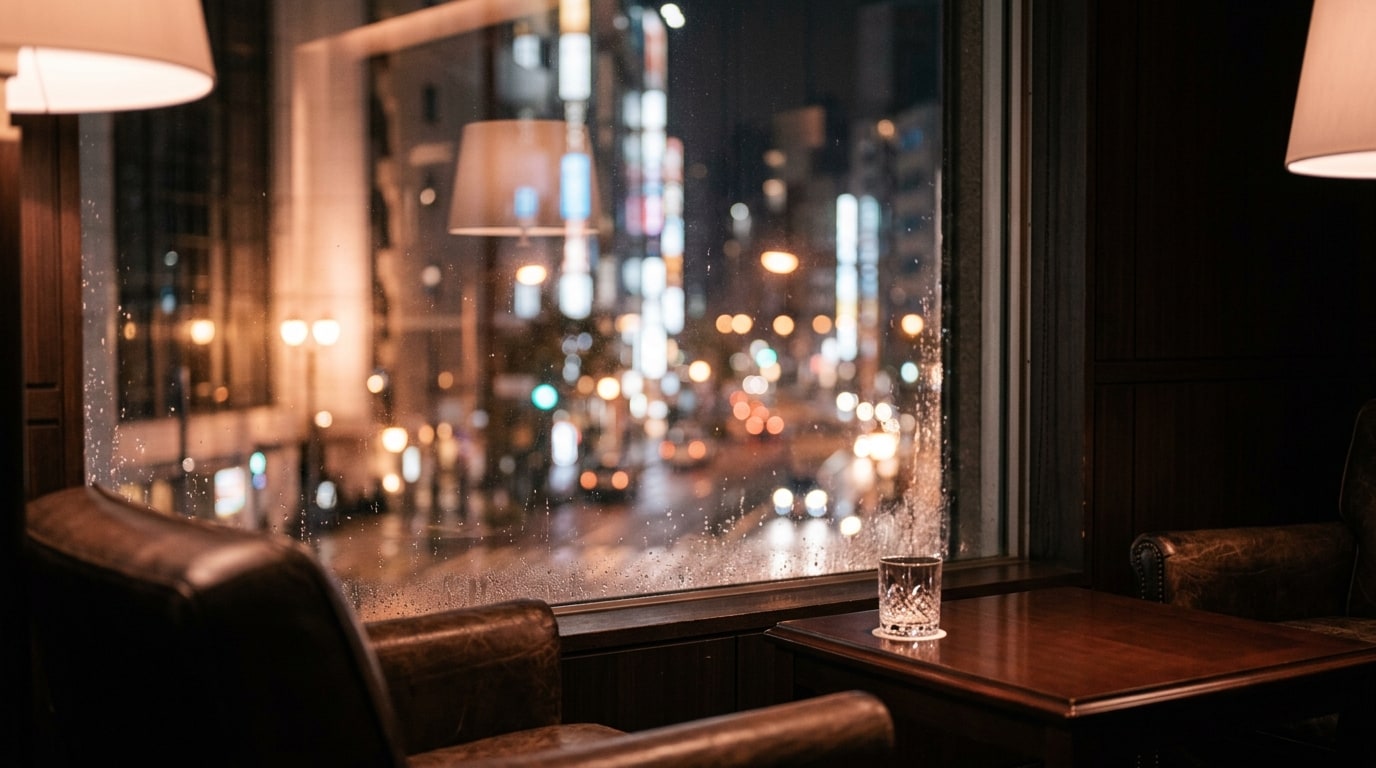
Tokyo Nightlife in Tsuyu: A Rainy Season Guide for Roppongi
Japan’s rainy season has its own name — 梅雨 (tsuyu), literally “plum rain” — and it lands in Tokyo from about the second week of June through the third week of July every year. Most travel guides skim it. They shouldn’t. The weather is real, it changes how a Tokyo evening feels, and a few small choices about where you go can be the difference between a calm night and forty minutes of walking around looking for an awning.
- Tokyo's rainy season (tsuyu / 梅雨) runs roughly June 11 – July 20 each year.
- The pattern is intermittent, not constant — six weeks of variable wet + humid weather.
- Roppongi handles rain better than Shinjuku or Shibuya thanks to covered walkways and compact venues.
- Private-suite lounges (including LUNE) need only one elevator ride from street to suite — zero outdoor exposure.
- Plan one-venue evenings during tsuyu rather than multi-bar hops.
What tsuyu actually feels like in Tokyo
Tsuyu isn’t one weather pattern; it’s a six-week stretch of intermittent rain. Some days it’s a steady drizzle from morning through evening. Some days it pours for forty minutes then clears completely. Some days it stays muggy and threatening without ever quite raining. Tokyo locals keep a foldable umbrella in their bag from early June through mid-July and check the hourly forecast (not the daily) before they leave the house.
The two practical inconveniences for nightlife visitors are simpler than the forecast suggests. First: any venue you walk to from the station turns into a small calculation about umbrella storage — most Tokyo bars and restaurants handle this with umbrella locks in the entryway, but it adds a tiny ritual to every transition. Second: humidity hits 80%+ for most of June, so by the time you walk five blocks from your hotel to dinner, your shirt sticks. Indoor venues that are properly air-conditioned are noticeably better than indoor venues that are merely “covered.”
Why Roppongi handles rain better than Shinjuku or Shibuya
This is geography more than venue quality. Shinjuku’s nightlife district (Kabukichō, Golden Gai, Omoide Yokochō) runs across multiple narrow streets that have you constantly crossing intersections without cover. The Golden Gai bars in particular each occupy a single floor of a tiny building, so even moving between two bars usually means going back outside. Shibuya’s bar streets are similar — high turnover, lots of small venues, lots of brief outdoor walking between them.
Roppongi runs differently. The big mixed-use complexes (Roppongi Hills, Tokyo Midtown) connect entire floors of restaurants and bars under one roof, accessed directly from the train station via covered walkways. The smaller lounge venues — including LUNE — sit a few minutes from Roppongi Station Exit 3 in compact buildings where a single elevator ride from street level takes you to a private floor with no further outdoor exposure. If your evening is “land at Roppongi, one venue, then a taxi home,” the rain almost never touches you.
Where to plan an indoor evening that doesn’t depend on the forecast
A few categories that work through tsuyu without you needing to watch the radar:
Department-store bar floors — Ginza Six, Tokyo Midtown, Roppongi Hills, and Shibuya Hikarie all have bar and restaurant floors accessible directly from station-connected basements. Walk underground from the train, take an escalator up, no umbrella.
Hotel bars — Park Hyatt Tokyo, Andaz Tokyo, Aman Tokyo, Mandarin Oriental: all reachable by taxi from any major hotel without you ever stepping outside more than the length of the porte cochère.
Private-suite lounges — LUNE included. Reservation-only, one elevator ride from street to suite, no shared corridor, and (because the suites are sound-treated) no spillover from other parties even if the building lobby happens to be full. You wait nowhere.
Karaoke boxes and izakaya in covered shopping arcades — commercial streets like Azabu-juban or the older shōtengai districts have roofed-over arcades that span the whole street, so moving between venues is effectively walking under a long awning.
How to plan a Roppongi evening through tsuyu, specifically
Concrete decisions that make rainy-night Roppongi work, not abstract advice:
Take a taxi from your hotel directly to your first venue rather than the train if the forecast is sustained rain. Roppongi taxi fares from Shinjuku-area hotels are ¥2,500–¥3,500 after 21:00 — adding ten minutes and ¥1,500 to skip a wet walk is a fair trade for a planned evening.
If you’re using the train, exit at Roppongi Station via Exit 3 (Hibiya line / Toei Oedo line) or Roppongi-itchome Station Exit 1 (Tokyo Metro Namboku line). Both have shorter outdoor segments to the main venue strip than the alternatives.
Book reservation-only venues so you’re not standing in line outside in the rain. LUNE caps the night at three parties, so the moment you reach the building you go straight up — no queuing in a wet entryway.
Plan one venue per evening rather than the rotating multi-bar pattern that works on dry nights. Tsuyu is not the right week to walk between three Golden Gai bars; it’s the right week to commit to a longer single-venue evening.
Carry a foldable umbrella even if the day looked clear. Convenience-store umbrellas are ¥500–¥800 and available at every 7-Eleven and FamilyMart if you get caught — but the line at midnight after the rain starts can run six deep.
Common questions
When exactly is Japan’s rainy season?
In Tokyo (Kantō region), tsuyu typically runs from around June 11 to July 20 each year. The official start and end dates are declared annually by the Japan Meteorological Agency and shift by a few days year to year. Other regions have different windows — Okinawa starts in early May, Hokkaido has effectively no rainy season at all.
Is it actually raining every day during tsuyu?
No. The pattern is intermittent — six weeks of variable wet and humid weather, not six weeks of constant rain. You’ll get plenty of dry hours; you’ll also get sudden downpours. The forecast app on your phone matters more in tsuyu than at any other time of year.
Can I visit LUNE during tsuyu without worrying about the rain?
Yes. From Roppongi Station Exit 3, the walk is two minutes and partly under cover. Once you reach our building (Power House Roppongi, 7-12-3 Roppongi), one elevator ride takes you to your suite — no shared corridor, no waiting in the lobby. If you arrive by taxi, you step from the curb to the building entrance without exposure. Bring a foldable umbrella for the walk back if you’re not taking a taxi home.
What should I wear if it’s raining and humid?
Smart casual that doesn’t show sweat — a light shirt or blouse, comfortable trousers or skirt, closed shoes that handle wet pavement (open sandals get uncomfortable on Tokyo’s tiled walkways when wet). LUNE has no formal dress code. If you’re walking from a hotel more than three blocks away, consider a taxi rather than a wet evening commute. To reserve, use the form at lune-roppongi.jp/en/reserve.