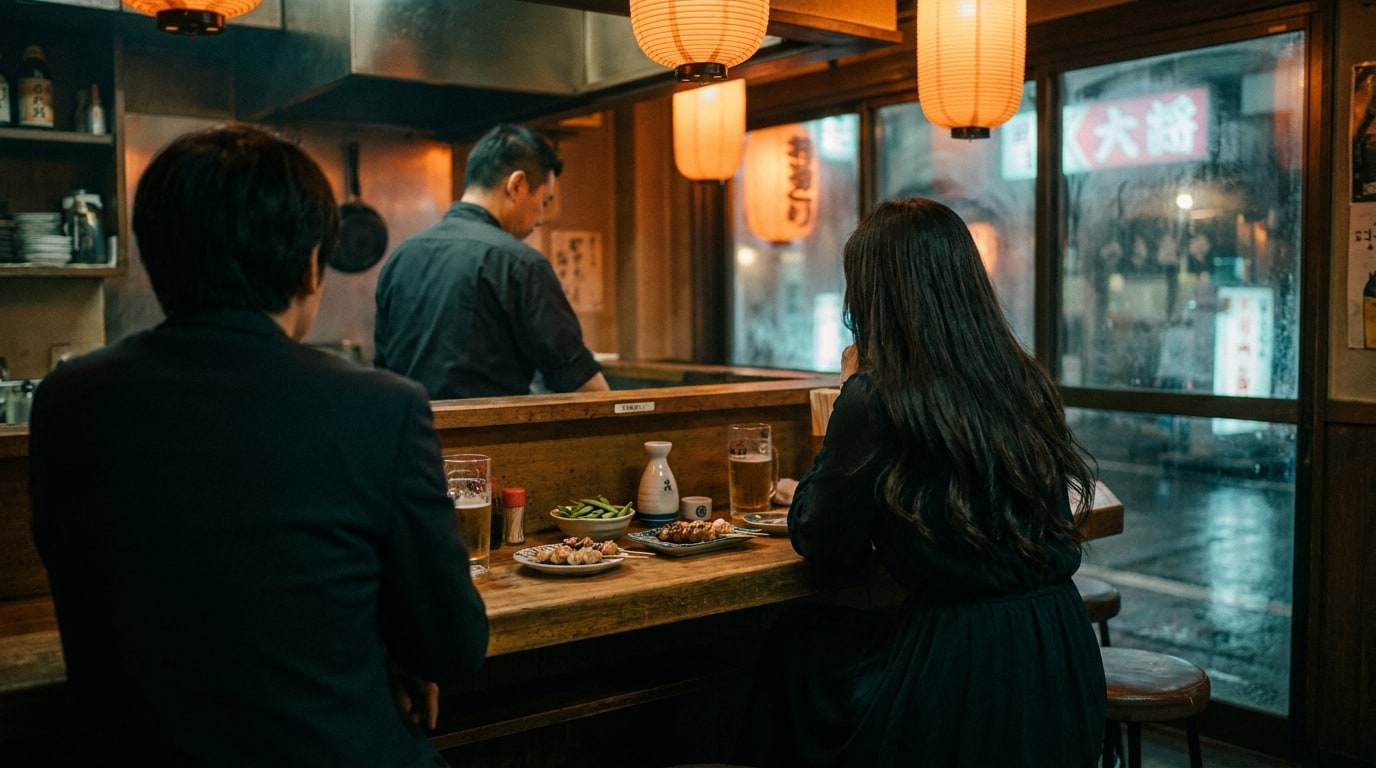
Nijikai (二次会): Japan's Second-Party Drinking Culture, Explained
Ask anyone in Japan how a good night out ends, and the answer is almost never “after dinner.” Dinner — or the first round of drinks — is just the opening chapter. What follows has a name: the nijikai (二次会), literally the “second gathering.” It’s one of the most deeply embedded customs in Japanese social life, and one of the least explained to visitors. If you’ve ever watched a group of Japanese colleagues stand up from a perfectly good izakaya at 9:30 PM only to walk three doors down into another one, this post explains what just happened.
What “Nijikai” Actually Means
The word breaks down cleanly: ni (二, two) + ji (次, sequence) + kai (会, gathering). The second gathering of the evening.
The first gathering has a name too: the ichijikai (一次会), or in work settings, the enkai (宴会, banquet). If the night keeps going, there’s the sanjikai (三次会, third party). A yonjikai (fourth party) exists mostly as a war story told the next morning.
The underlying idea is the part worth absorbing: in Japan, an evening out is not one event. It’s a sequence of chapters, each at a different venue, each with a different mood and usually a smaller group than the last. Moving venues isn’t a failure of the first place — it’s the structure of the night working as intended.
Where the Nijikai Shows Up
The custom appears in three main habitats:
1. After work. The classic case. A company dinner or enkai is formal: seating arranged by seniority, an opening toast from the highest-ranking person, juniors pouring for superiors. It typically ends around 9:00 or 9:30 PM with a closing clap (tejime) — and then someone asks: “Nijikai, ikimasen ka?” Whoever wants to continue peels off to a more casual izakaya or a karaoke box. Attendance at the enkai is close to expected; attendance at the nijikai is genuinely optional.
2. Weddings. The wedding nijikai is a genre of its own, and one of the first things foreign guests find surprising. Japanese wedding receptions (hirōen) are formal and limited — guests bring gift money (goshūgi, typically ¥30,000 or more) and the list is restricted to family and important relations. The nijikai is a separate party, often at a different venue, with a separate guest list: friends and coworkers who weren’t invited to the ceremony. Entry is a flat announced fee (commonly ¥5,000–¥10,000), the dress code relaxes, there are games and a bouquet toss, and it’s frequently organized by the couple’s friends rather than the couple. For many people, the nijikai is the wedding they attend.
3. Nights out with friends. No hierarchy to escape here, but the rhythm holds: dinner first, then the standing-on-the-sidewalk negotiation — “Tsugi, dō suru?” (What’s next?) — and a smaller group heads to the second spot.
The Social Logic: Why the Second Party Matters More
The nijikai exists because the first party has a job to do, and that job isn’t fun.
The formal dinner is built on obligation — rank, pouring order, speeches, careful conversation. This is the territory of tatemae, the public face. Everyone performs their role, and the performance is the point.
The nijikai is where honne — what people actually think — comes out. The group has shrunk from twenty to eight. The section chief who gave a stiff speech an hour ago is now choosing a karaoke song. Ranks soften; some workplaces even invoke bureikō (無礼講), an explicit declaration that rank etiquette is suspended for the night. The people who clicked at dinner keep talking; the conversation that couldn’t happen at the long formal table happens in the small booth.
This is why declining the first party is a statement but declining the second isn’t: the ichijikai is duty, the nijikai is choice. And if a colleague invites you specifically to the nijikai, take it as a quiet compliment.
Where the Second Party Happens
The standard rotation, roughly in order of popularity:
- Izakaya — a second, cheaper, louder one than the first. Drinks over food this time.
- Karaoke box — the default nijikai for work groups. Private room, hourly rate, drink orders by phone.
- Snack bar — a small counter bar run by a mama, common for older groups and regulars. (More on this category in our Roppongi nightlife glossary.)
- Darts, shot bars, late lounges — the Roppongi-flavored options.
- Ramen — the traditional finale, the shime no rāmen (締めのラーメン, “closing ramen”). When the sanjikai is a bowl of tonkotsu at 1:30 AM, the night is officially complete.
How LUNE Builds the Nijikai Into the Evening
A brief word on how we handle this custom at LUNE — because we built it directly into the offer.
LUNE is a casual private lounge on the 6th and 7th floors of Power House Roppongi (7-12-3 Roppongi, one minute from Roppongi Station). The format is simple: ¥18,000 per person for 60 minutes, all-inclusive — private suite, a cast companion to host your table, free-flowing house drinks, karaoke, tax and service. Three suites per night, each holding 1–6 guests, reservation only, open 20:00–01:00.
Here’s the nijikai part: guests who stay more than two hours, once the clock is past 1:00 AM, may invite their cast member to continue the evening at a nearby izakaya or late-night spot. LUNE charges nothing extra for this. It’s strictly social — you simply cover the izakaya tab itself, the way anyone inviting someone out for a late bowl of ramen would.
To be clear about why this is unusual: most hostess-type venues in Japan end at the door. The kyabakura world has its own version of the “after” — the afutā (アフター) — but it operates inside a sales relationship: it’s informally reserved for big spenders, and it comes with implicit expectations of nominations, bottles, and return visits. LUNE is not a kyabakura (here’s the full difference) — there’s no physical contact, no pressure mechanics, and the nijikai option isn’t a reward for spending; it’s a flat house rule, and a chance to experience an actual Japanese custom with someone who lives it. Our cast are Japanese hosts of the evening; our staff handle English and Chinese, so language won’t strand you. The full mechanics of an evening are in How to Play.
Four Phrases That Will Carry You Through a Nijikai
- Nijikai, ikimasen ka? (二次会、行きませんか?) — “Shall we go to the second party?” — the standard invitation
- Mō ikken dake! (もう一軒だけ!) — “Just one more place!” — the famous last words of every Tokyo night
- Tsugi wa karaoke ni shimashō (次はカラオケにしましょう) — “Let’s make the next stop karaoke”
- Shime no rāmen, ikimashō (締めのラーメン、行きましょう) — “Let’s go for the closing ramen” — how the night formally ends
Frequently asked questions
What does “nijikai” literally mean?
二次会 combines 二 (ni, two), 次 (ji, sequence or order), and 会 (kai, gathering): “the second gathering.” It refers to the second venue of an evening — after a work banquet, a wedding reception, or simply dinner with friends. The first party is the ichijikai; a third is the sanjikai.
Is it rude to skip the nijikai?
No. The nijikai is by definition optional — it’s the polite exit point of the evening. In work contexts, attending the first party (enkai) is close to expected, but nobody is judged for bowing out before the second. A simple “Kyō wa kore de shitsurei shimasu” (“I’ll excuse myself here tonight”) covers it completely.
Who pays at a nijikai?
Usually everyone splits the bill (warikan). This differs from the first party, where a company budget or the most senior person often covers more of the cost. At a wedding nijikai, there’s a flat entry fee (kaihi) announced in the invitation, typically ¥5,000–¥10,000.
How is LUNE’s nijikai different from a kyabakura “afutā”?
A kyabakura afutā is informal and transactional: it’s generally available only to high-spending regulars, and it carries implicit obligations — nominate the hostess, order bottles, keep coming back. LUNE’s nijikai is a published house condition, not a sales lever: stay more than two hours and past 1:00 AM, and you may invite your cast member to a nearby izakaya at no extra charge from LUNE, strictly social. The only money involved is the izakaya bill itself, which you cover as the host of the outing.
Planning a night that deserves a second chapter? LUNE has three private suites per night, 20:00–01:00, one minute from Roppongi Station. ¥18,000 per person for 60 minutes, everything included. Reserve your suite.